Restaurant Koubideh vs Home Koubideh: 6 Things Kabab Houses Do That You Don't
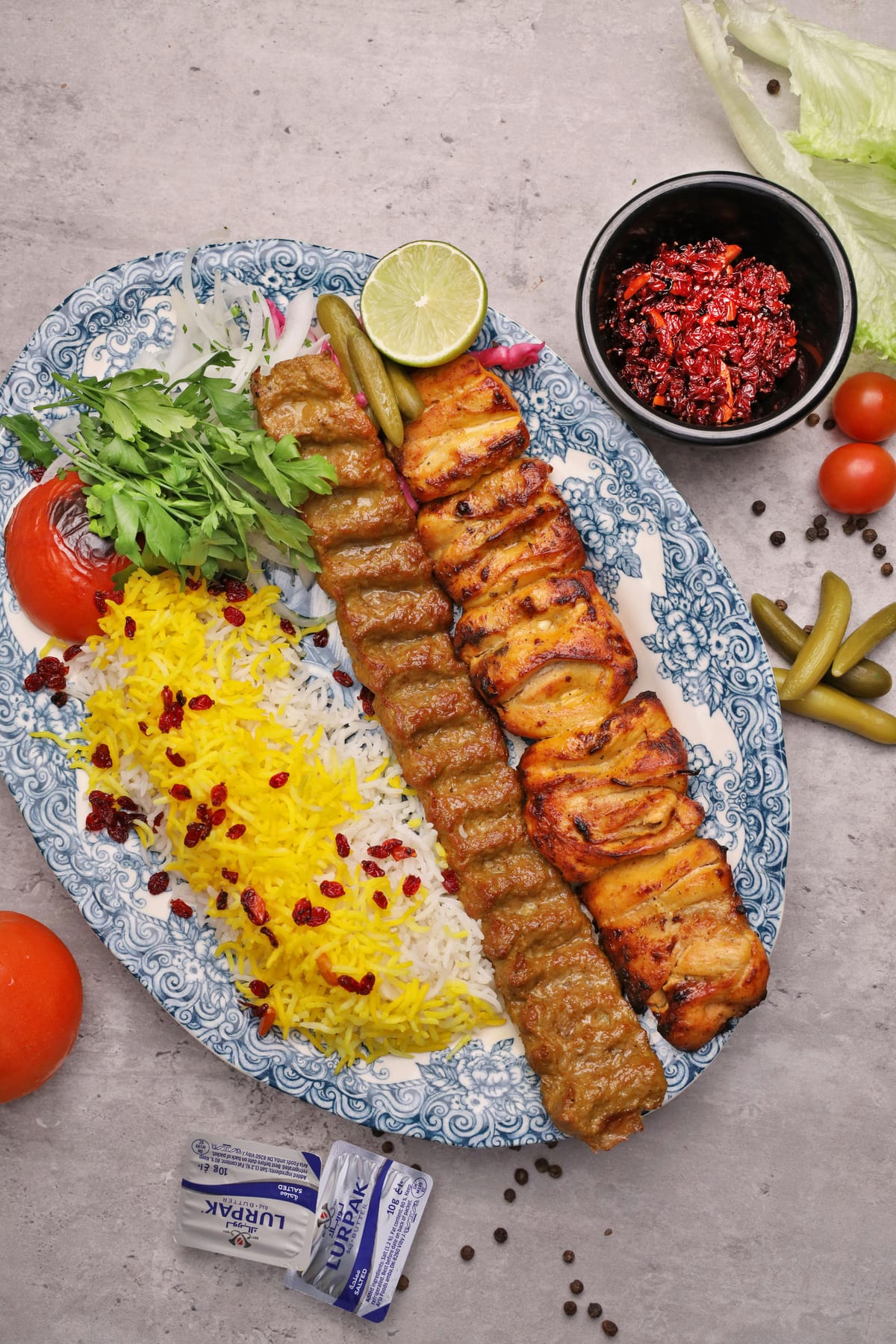
You make Koubideh at home. It's good. Your friends are polite. But there's something the restaurant version has — that smoky depth, that perfect crust, that meat hangs straight on the skewer look — that yours doesn't quite hit.
The recipe isn't the secret. The technique is, and most of it isn't even about the meat. After many late nights in Iranian-American kabab houses and a few too many embarrassing home failures, here's what we learned restaurants do differently.
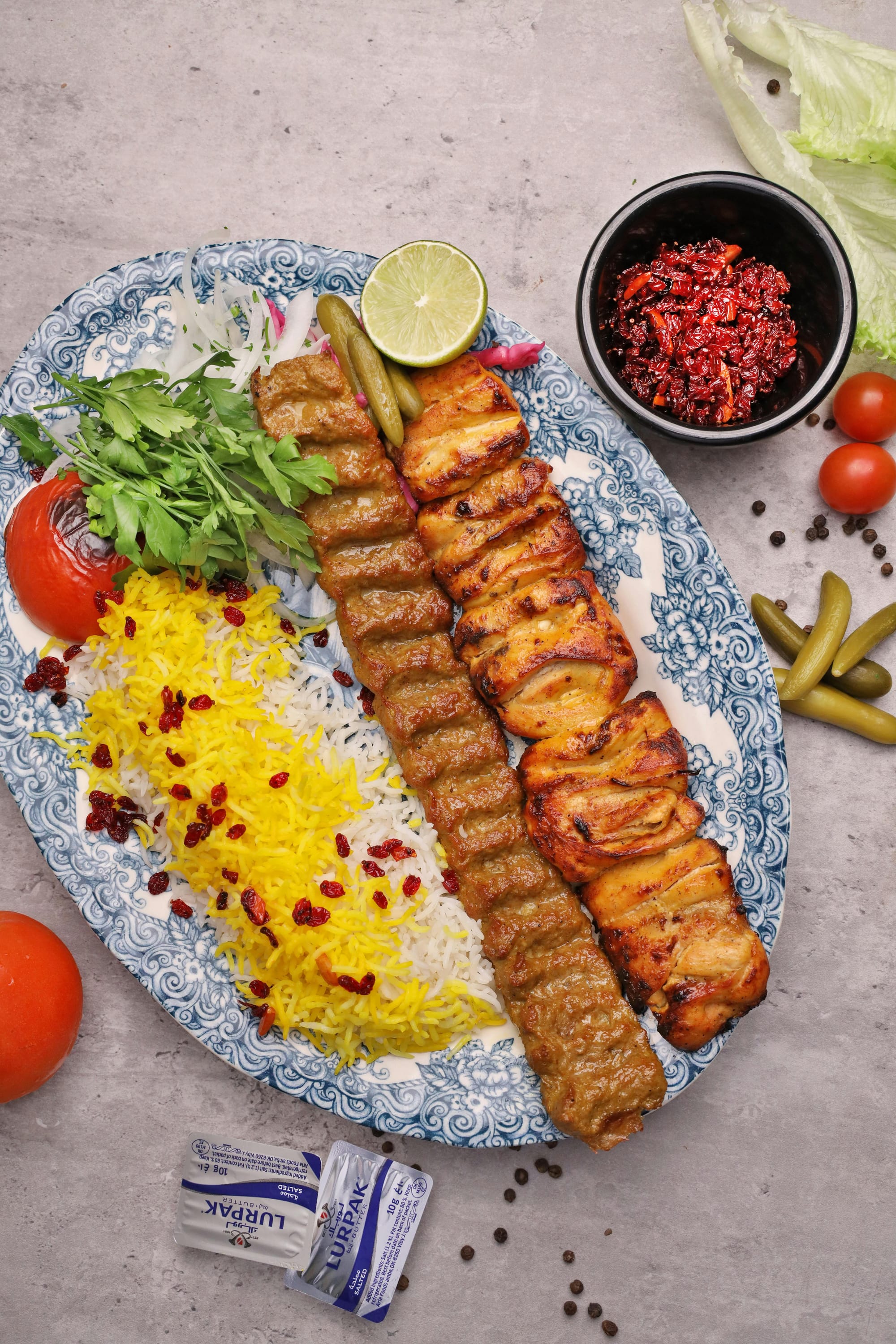
1. They grind the meat twice
Most home cooks buy "ground lamb" or "ground beef" at the grocery store and stop there. Restaurants grind twice — usually a coarse first pass, then a fine pass. The double grind breaks fibers down enough that the meat becomes elastic rather than crumbly. That elasticity is what makes Koubideh wrap around a skewer and stay.
Home fix: Ask your butcher for a double grind, or run your store-bought meat through a food processor in 10-second pulses (3–4 pulses) before kneading.
2. They use 20–30% fat — measured
The "lean ground lamb" at most American grocery stores is 80/20 at best, often leaner. Persian restaurants run closer to 70/30. That extra 10% of fat is what bastes the meat from the inside, gives you the slick crust, and prevents the "dry edge."
Home fix: Ask the butcher for lamb shoulder ground to 70/30, or buy lamb shoulder and grind your own.
3. They use flat, wide skewers — without exception
Walk into any Persian restaurant kitchen and you'll see exactly one type of skewer: flat steel blades, about 1 inch wide, about 24 inches long. Not round. Not bamboo. Not "skewers from the grilling aisle at Target." A specific tool, in a specific dimension, with a specific reason.
The flat blade locks the meat in place. The 1-inch width is exactly the diameter the meat needs to hang from. The 24-inch length spans a commercial mangal grill so the meat hangs above the coals — never touching a grate.
Home fix: Buy the right skewer. This is the single biggest gap between restaurant and home Koubideh, and it's the easiest one to close.
This is the gap that costs you the most.
Same skewer the restaurants use. Same dimensions, same steel, made for the same reason.
See the Arta skewer set →4. They cook over real charcoal
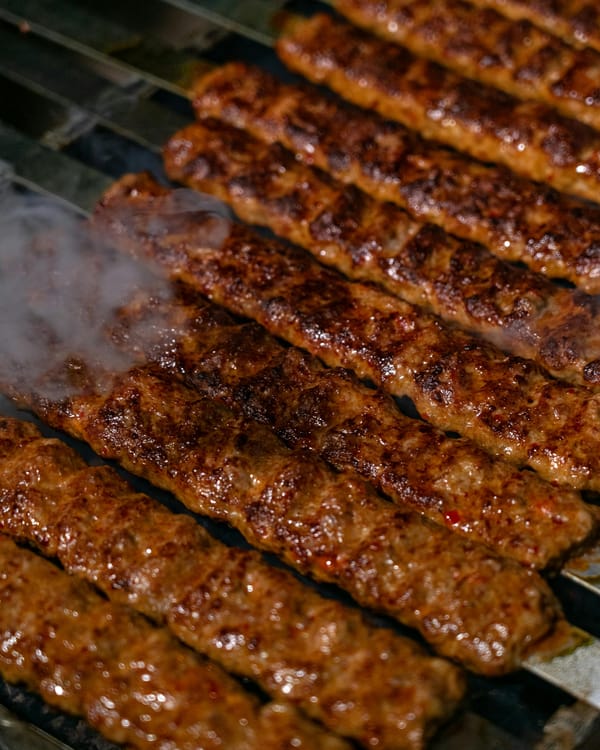
Gas grills are fine for almost everything else. For Koubideh, charcoal is not optional — and not because of "flavor" in some vague way. It's because charcoal puts out radiant infrared heat that cooks the surface of the meat fast while the inside stays juicy. Gas heats the air around the meat; charcoal heats the meat directly.
Restaurants also use a mangal — a long, narrow charcoal box that the skewers rest across without touching a grate. Critical detail: the meat hangs in the heat, never sits on metal.
Home fix: Lump charcoal in a kettle grill, with the grate removed and skewers resting on the rim. Or invest in a small mangal — they're $80–150 and last forever.
5. They rest the meat — twice
Home cooks rest the meat once: in the fridge after mixing. Restaurants rest it twice — once after mixing (for the bind), then again after forming on the skewer (often laid on a sheet pan for 5–10 minutes before going on the fire). The second rest lets the meat warm slightly so it cooks evenly through the center.
Home fix: Once your skewers are formed, give them 5 minutes on the counter before the grill.
6. They don't move the meat once it's on the fire
The biggest home cook mistake we see: poking, prodding, lifting, checking. The restaurant rule is 90 seconds, then flip — and only flip once per side. Each movement before the crust forms tears the meat off the skewer. Set a timer. Don't touch it.
The pattern
Look at the six: meat (1, 2), tool (3), heat source (4), patience (5, 6). Of those, the one most home cooks can change today — and the one that closes the biggest visible gap — is the tool.
Make your kitchen feel like a Tehran kabab house.
Start with the skewers. Everything else follows.
See the Arta skewer set →If you're ready for the recipe itself, here's our family Koubideh. If you want the chili-forward Tabrizi version, start here.