Nowruz on the Grill — A Persian New Year Kabab Tradition
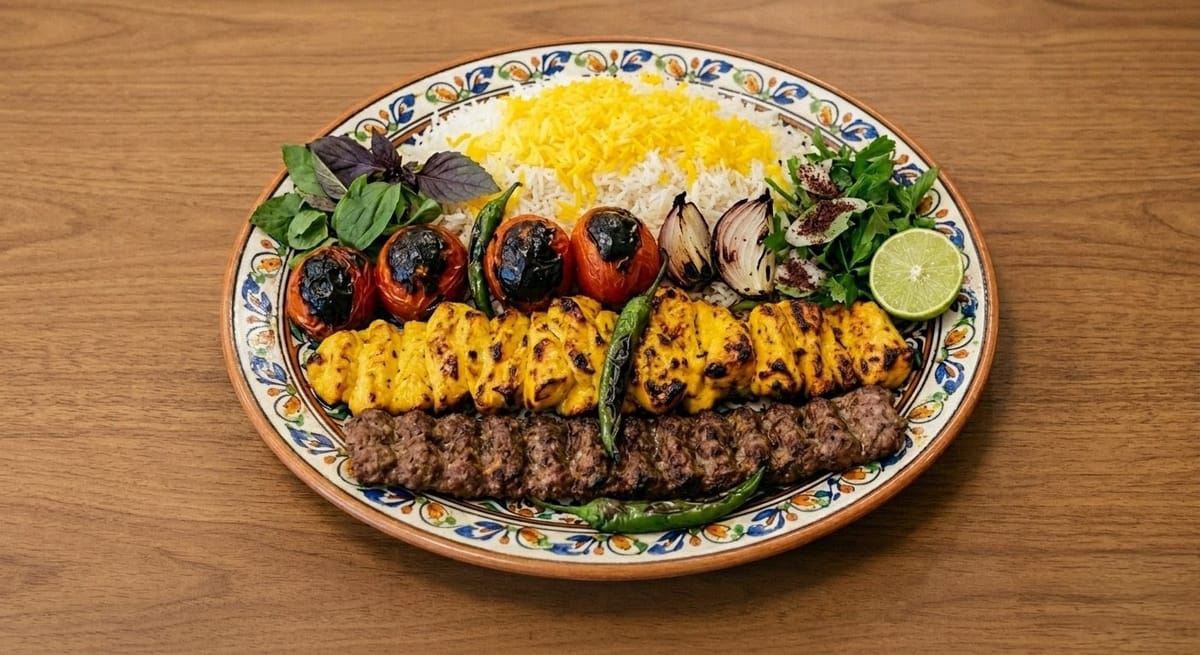
Nowruz is the Persian New Year. It falls on the spring equinox — usually March 20 or 21 — and runs for 13 days. In every Iranian and Iranian-diaspora household, food is the centerpiece. And while koubideh isn't strictly a Nowruz dish, the grill is rarely cold during those 13 days.
What Nowruz is
Pre-Islamic, agrarian, deeply Persian. Celebrated for over 3,000 years across what's now Iran, Afghanistan, Tajikistan, parts of Turkey, Iraq, Azerbaijan, and the Iranian diaspora worldwide.
The actual moment of the new year is the precise instant of the spring equinox — astronomical, not calendar-based. Families gather around the haft-sin table at that exact moment, whatever time of day or night it falls.
The Haft-Sin table
The centerpiece of every Nowruz home. Seven (haft) items, each starting with the Persian letter sin (S), each symbolic:
- Sabzeh — sprouted wheat or lentils. Rebirth.
- Samanu — wheat pudding. Strength.
- Senjed — dried oleaster fruit. Love.
- Seer — garlic. Health.
- Seeb — apple. Beauty.
- Somaq — sumac berries. Sunrise / the new dawn.
- Serkeh — vinegar. Patience / wisdom of age.
Plus typically: painted eggs (fertility), goldfish (life), a mirror (reflection), a Hafez book of poetry (cultural inheritance), candles, and coins.
Setting a proper haft-sin is one of the biggest annual rituals in the Persian household. The Arta Haft-Sin kit — coming this winter — bundles all seven plus the accents in one designed gift box for diaspora families and gift-givers.
The food across 13 days
Each day of Nowruz has different food traditions. Some highlights:
Day 1 (Nowruz day itself): Sabzi Polo Mahi
Herbed rice with white fish. The herb (sabzi) symbolizes new growth. The fish symbolizes life and movement. Eaten at lunch or dinner.
Day 2-12: Open house
Families visit each other. Hosts serve nuts, dried fruits, ajeel (Persian trail mix), tea, sweets, sometimes a meal. Every visit you eat. Every visit. For 13 days.
Day 13 (Sizdah Bedar): Picnic outside
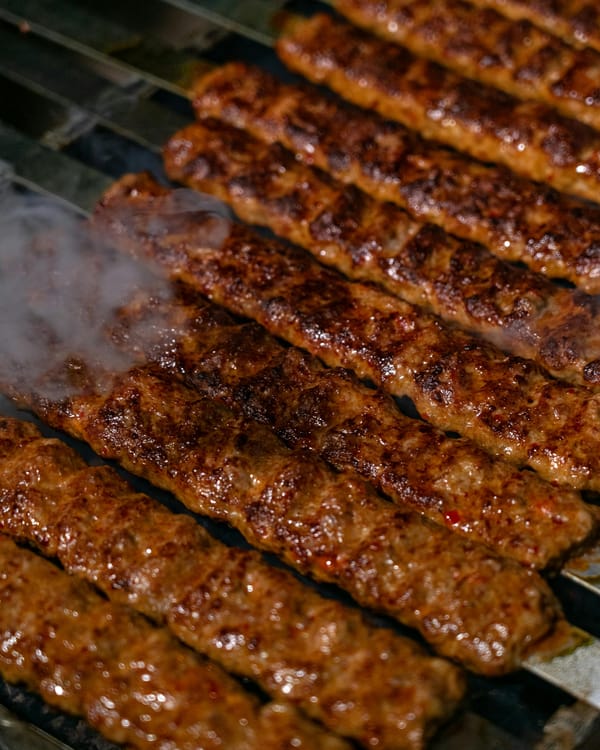
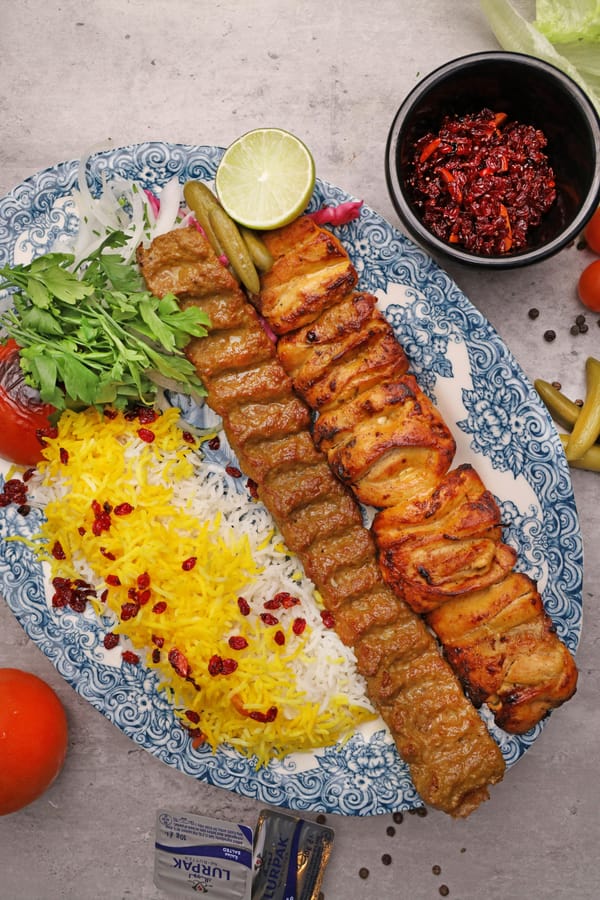
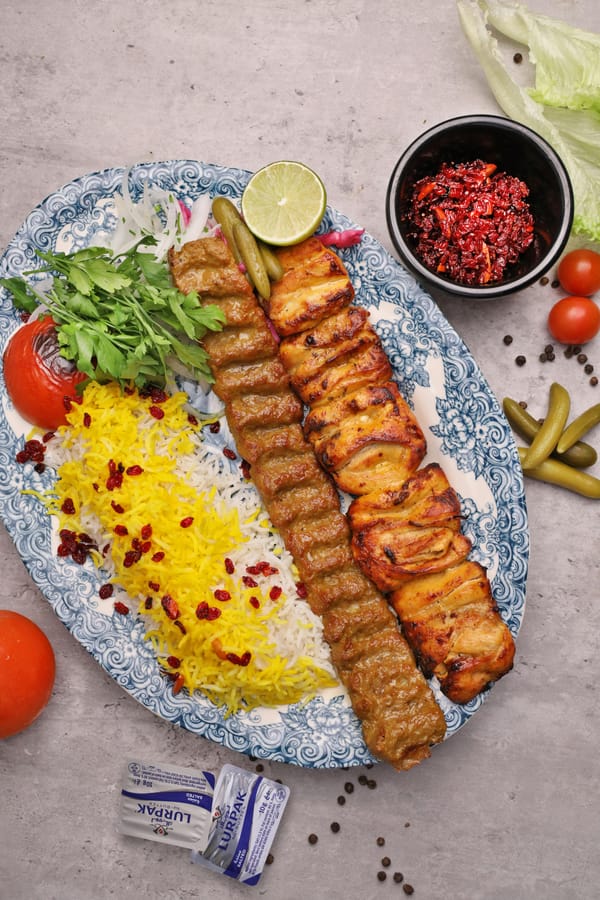
Persians believe staying indoors on the 13th day is bad luck. So everyone goes outside — parks, riverbanks, mountains — and picnics. This is when the grills come out. Koubideh, jujeh, barg over charcoal on a sunny day in late March.
If you've ever been to a Persian park on Sizdah Bedar, you've smelled it from a mile away. Grills everywhere. Saffron in the air.
Our family's Sizdah Bedar
We'd load the car the night before. Cooler full of marinated jujeh and barg, koubideh mix in a tupperware, charcoal, skewers, lavash, the saffron-rice pan, sumac, raw onion, doogh in jars, sabzi platter, a tablecloth, a guitar, and the family.
Drive to whichever park had the best grills and the fewest other Persian families (a rapidly-vanishing combination in the diaspora — Persians find each other on Sizdah Bedar).
Set up the grill, light the coals at noon, cook through the afternoon, eat for hours. Throw the sabzeh from the haft-sin into a stream at the end of the day — a 3,000-year-old ritual of returning new growth to running water.
That's Nowruz at the family grill.
If you're new to Nowruz
You don't need to be Persian to celebrate. The traditions are open. If you have Persian neighbors, friends, or coworkers, ask if you can join them on Sizdah Bedar — they'll bring you in, feed you, teach you the symbols.
If you want to host your own: get a haft-sin going (the Arta kit when it's available, or build your own), invite friends, grill some koubideh and jujeh, and serve it at sunset on March 20-ish.
Nowruz Mobarak — Happy Persian New Year — whenever you read this.
— The Arta Kitchen family